
Three receptors, one molecule: how triple agonists work
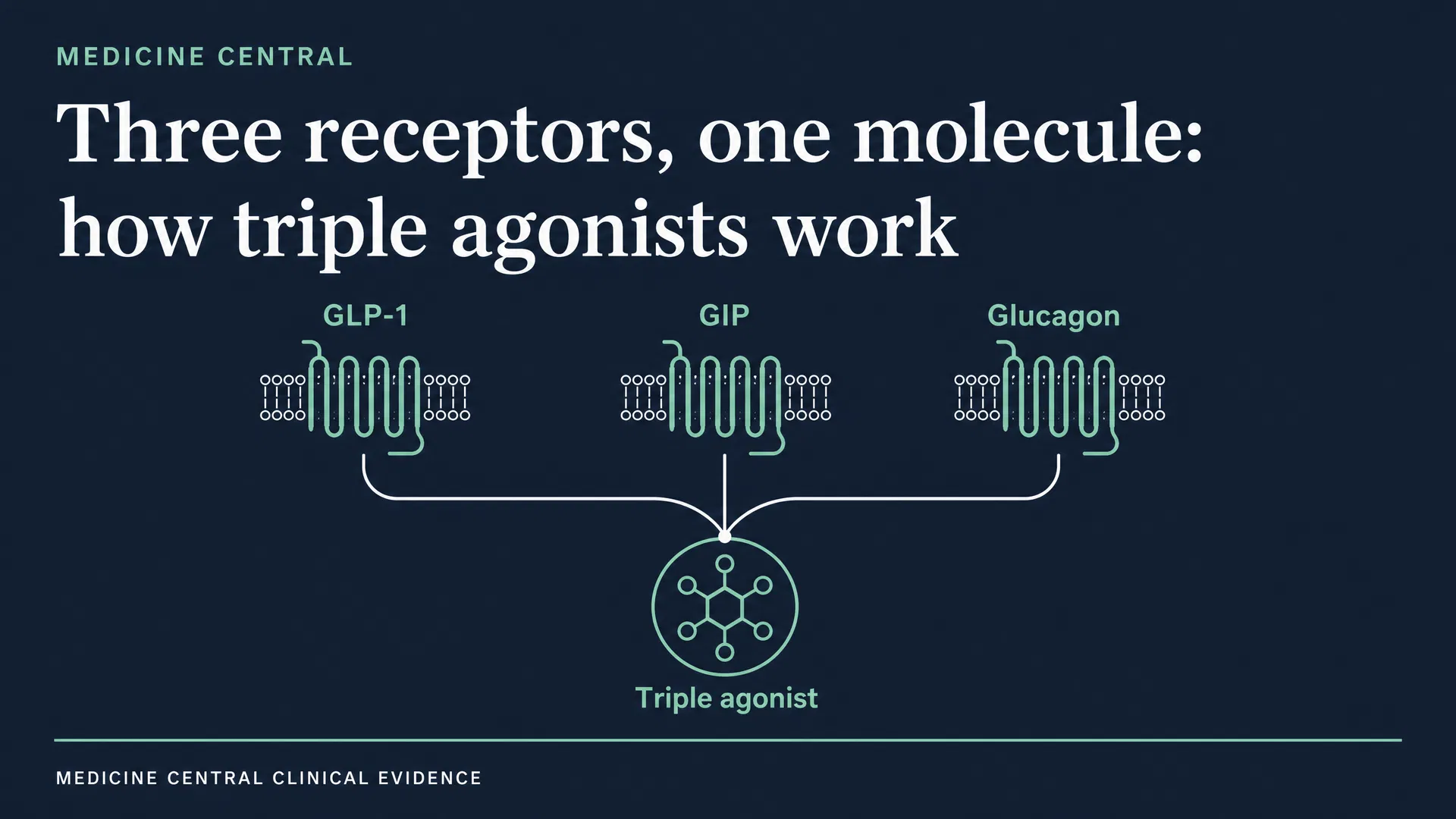
A triple agonist is a single peptide with activity at the GLP-1, GIP and glucagon receptors. This animation maps where each one acts and what the early trial evidence shows.
A triple agonist is a single peptide with activity at the GLP-1, GIP and glucagon receptors. The animation below maps where each one acts.
At the pancreatic beta cell, GLP-1 and GIP signalling contributes to glucose-dependent insulin release. GLP-1 also acts in the brain and gut, where it influences appetite and gastric emptying. The glucagon receptor, expressed on the liver, is linked to energy expenditure and hepatic fat metabolism — a signal that runs opposite to the insulin-raising pathways.1
In phase 2 randomised trials, this receptor combination was reported to reduce bodyweight in adults with obesity2 and to improve glycaemic control in type 2 diabetes.3 The molecules remain investigational, with phase 3 trials ongoing.
- Coskun T, Urva S, Roell WC, et al. LY3437943, a novel triple glucagon, GIP, and GLP-1 receptor agonist for glycemic control and weight loss: from discovery to clinical proof of concept. Cell Metab. 2022;34(9):1234-1247.e9. https://doi.org/10.1016/j.cmet.2022.07.013
- Jastreboff AM, Kaplan LM, Frías JP, et al. Triple-hormone-receptor agonist retatrutide for obesity: a phase 2 trial. N Engl J Med. 2023;389(6):514-526. https://doi.org/10.1056/NEJMoa2301972
- Rosenstock J, Frias J, Jastreboff AM, et al. Retatrutide, a GIP, GLP-1 and glucagon receptor agonist, for people with type 2 diabetes: a randomised, double-blind, placebo and active-controlled, parallel-group, phase 2 trial conducted in the USA. Lancet. 2023;402(10401):529-544. https://doi.org/10.1016/S0140-6736(23)01053-X
Enjoyed this article?
- ✓Unlimited access to clinical evidence articles
- ✓Weekly newsletter with clinical evidence
- ✓Free for registered healthcare professionals