
Type 2 Diabetes
A clinical reference for UK primary care
Last reviewed 28 April 2026 · Next review July 2026
Type 2 diabetes management has shifted considerably. Cardiovascular and renal protection now sit alongside glycaemic control as primary targets, and the threshold for early intensive intervention has moved earlier in the patient journey.1
Around 4.6 million people in the UK live with diabetes, with type 2 making up roughly 90%.3
Prevalence continues to climb, with a notable rise in adults under 40.3
Recent in Type 2 Diabetes

8 Jun 2026
NG28 NICE GUIDELINES: The Flozin-First Era, and 810,000 More GLP-1 Patients
28 Apr 2026
FreeDM2: Real-time CGM for type 2 diabetes on basal insulin.
2 Apr 2026
GLP-1 for Alzheimer's? EVOKE trial says no

13 Mar 2026
GLP-1 Receptor Agonists: Mechanism of Action
11 Mar 2026
SGLT2i vs GLP-1 RA: which one offers more kidney protection?

22 Feb 2026
MHRA Safety Update: Semaglutide and the Risk of Rare Vision Loss

5 Feb 2026
The GLP-1 revolution: the good, the bad and the ugly

31 Jul 2026
BMI and type 2 diabetes: how much do ethnicity, age, and sex matter?
16 Jun 2026
REIMAGINE-2: how effective is combination therapy for type 2 diabetes?
12 Jun 2026
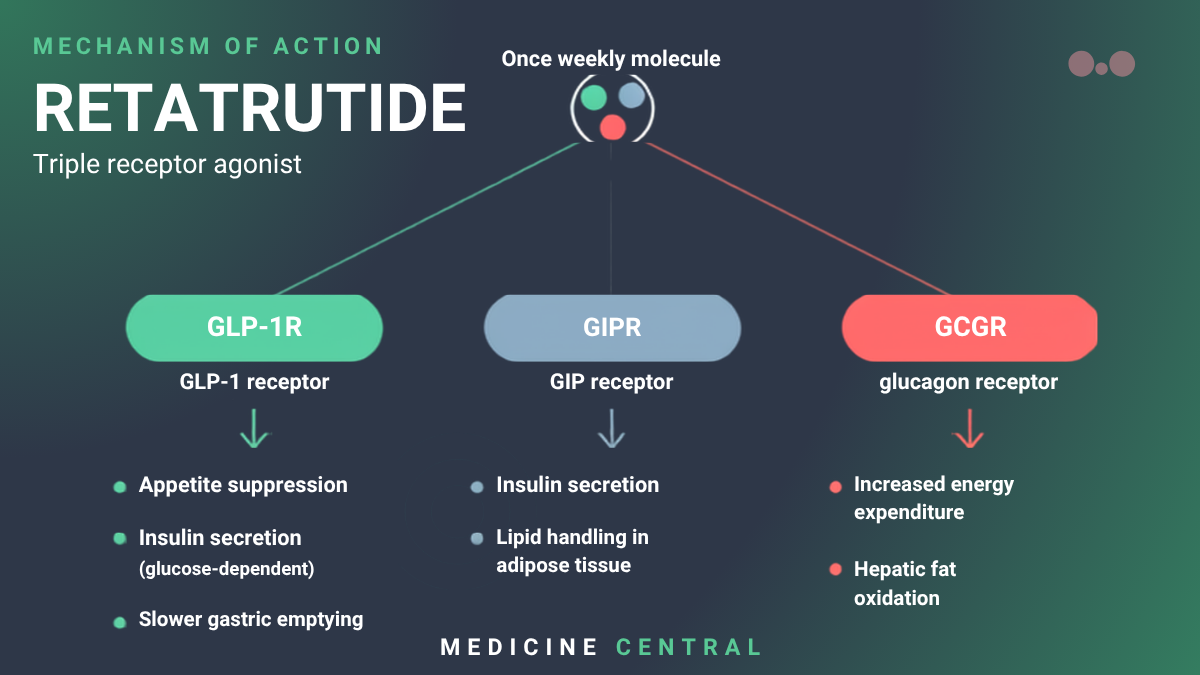
The phase 3 diabetes endpoint for retatrutide has been met, as shown by TRANSCEND-T2D-1

9 Jun 2026
ACHIEVE-5 phase 3 trial shows superiority of GLP-1 RA alongside basal insulin
17 May 2026
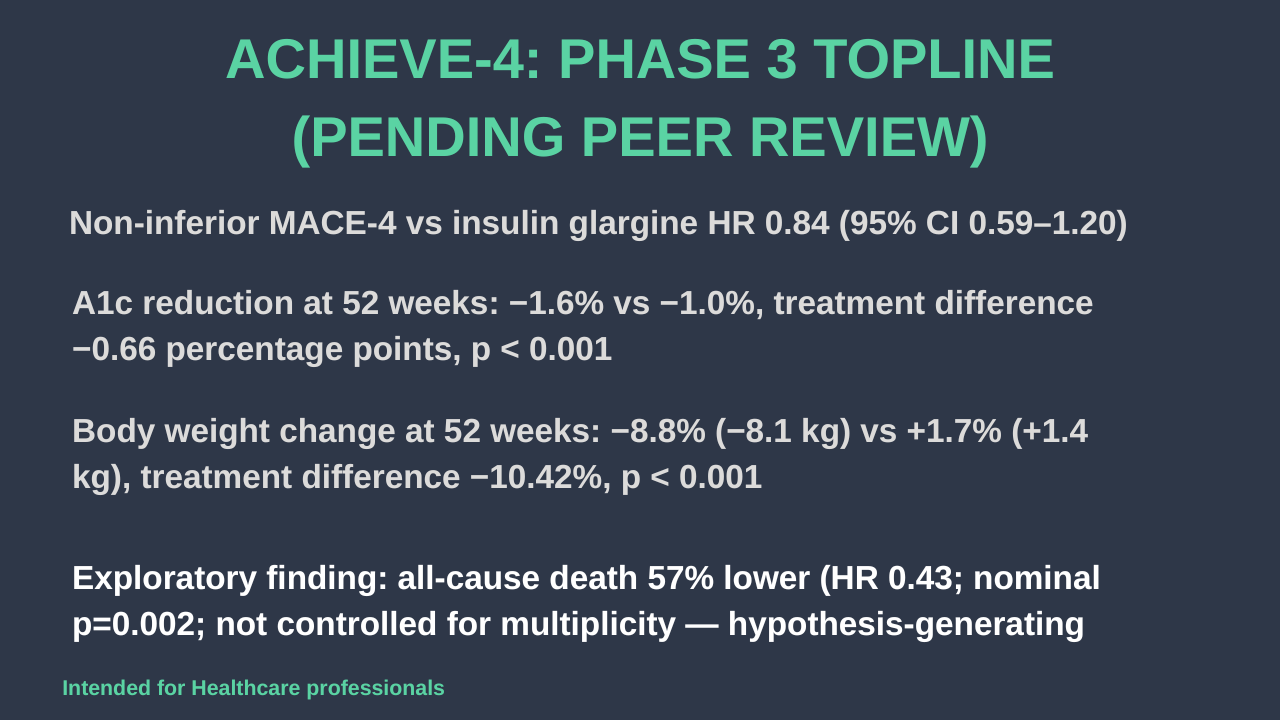
ACHIEVE-4: what the mortality signal actually tells UK clinicians
Diagnostic criteria
Four diagnostic routes accepted by NICE, based on WHO criteria.2,4
Validated tools used in primary care
CARDIOVASCULAR
QRISK3
10-year risk of MI or stroke. The standard CV risk tool in UK primary care.5
RENAL
FOOT
Diabetic foot risk stratification
Annual stratification into low, moderate or high risk. Determines screening interval and foot protection service involvement.8
RETINAL
National diabetic eye screening
Offered annually from age 12. Some areas now use extended intervals for consistently low-risk patients.9
The annual care processes
The nine annual checks measured by the National Diabetes Audit.10
National Diabetes Audit
Track completion of all nine care processes for your practice
HbA1c
Glycaemic control
Blood pressure
Cardiovascular risk
Cholesterol
Full lipid profile
Serum creatinine
eGFR
Urine ACR
Renal screening
Foot examination
Annual risk assessment
BMI
Weight assessment
Smoking status
Cessation support
Retinal screening
National programme
Referral pathways
Suspected type 1 or monogenic diabetes. Complex needs. Persistent HbA1c above target despite optimised primary care.1
Per NG203: 5-year KFRE >5%, eGFR <30 mL/min/1.73m², or rapidly declining eGFR.6
Moderate or high foot risk on annual review. Active ulceration or limb-threatening features warrant same-day MDT referral.8
Women of reproductive age planning pregnancy, per NG3.11
Depression and anxiety are more common in adults with diabetes. Screen routinely and refer when indicated.1
Find all NICE updates relevant to primary care
View NICE GuidelinesThis disease hub is intended for UK Healthcare Professionals only. Content reports established clinical knowledge and current NICE guidance. It is not a substitute for clinical judgment or for the original guidelines. Last reviewed 28 April 2026. Last reviewed 28 April 2026.
References
All sources verified at last review. Where primary literature is cited, original peer-reviewed publications are linked.
- 1.National Institute for Health and Care Excellence. Type 2 diabetes in adults: management. NICE guideline NG28.
- 2.National Institute for Health and Care Excellence. Clinical Knowledge Summaries: Diabetes - type 2. Diagnosis.
- 3.Diabetes UK. Diabetes statistics.
- 4.World Health Organization. Definition and diagnosis of diabetes mellitus and intermediate hyperglycaemia (Geneva: WHO; 2006); and Use of glycated haemoglobin (HbA1c) in the diagnosis of diabetes mellitus (Geneva: WHO; 2011).
- 5.Hippisley-Cox J, Coupland C, Brindle P. Development and validation of QRISK3 risk prediction algorithms to estimate future risk of cardiovascular disease: prospective cohort study. BMJ. 2017;357:j2099.
- 6.National Institute for Health and Care Excellence. Chronic kidney disease: assessment and management. NICE guideline NG203.
- 7.Tangri N, Grams ME, Levey AS, et al. Multinational assessment of accuracy of equations for predicting risk of kidney failure: a meta-analysis. JAMA. 2016;315(2):164-174.
- 8.National Institute for Health and Care Excellence. Diabetic foot problems: prevention and management. NICE guideline NG19.
- 9.NHS England. Diabetic eye screening programme: standards.
- 10.NHS England. National Diabetes Audit.
- 11.National Institute for Health and Care Excellence. Diabetes in pregnancy: management from preconception to the postnatal period. NICE guideline NG3.