
Making sense of abnormal liver blood tests: a MASLD heuristic for primary care

On-demand CPD: abnormal liver blood tests and MASLD
Watch Dr Kevin Fernando's on-demand session on a structured primary-care approach to abnormal liver blood tests and MASLD.
Around one in five adults have abnormal liver blood results. However, in the BALLETS primary care group, only 2.5% had a specific liver disease.
If abnormal blood results are received, avoid reflexively repeating the entire panel after a month. Instead, focus on finding those few individuals with modifiable, progressive disease.
Most of the time, this disease is MASLD, or metabolic dysfunction-associated steatotic liver disease. We used to call it NASH. It’s now the most common liver disorder in the West, affecting up to 30% of adults in the UK. Among those with obesity or type 2 diabetes, the number can reach 90%.
I see MASLD as a metabolic disease. It shows how the liver reflects metabolic syndrome. This reframe is important. Cardiovascular disease, not liver disease, is the main cause of death in these patients.
Identifying MASLD is really cardiometabolic risk management.
Diagnosing the issue:
Check for hepatic steatosis and at least one cardiometabolic risk factor.
Liver enzymes may not always be reliable. They can be normal even in serious cases. So, I use the FIB-4 score to assess fibrosis risk instead of just the enzyme levels.
People at intermediate or high risk should receive second-line testing. They may also need a referral to a hepatologist, as stated in the EASL-EASD-EASO guidance.
What follows is primary care work:
Weight loss is a key factor for health. It works best with a Mediterranean diet, regular exercise, mindful alcohol consumption, and managing blood pressure, glucose, and lipids.
I use QRISK3 to assess cardiovascular risk. If needed, I recommend a statin.
Currently, there is no licensed MASLD therapy in the UK. However, resmetirom is approved in the US, and incretin-based agents are emerging fast.
Find these patients early, treat the metabolism hard, and you change the trajectory.
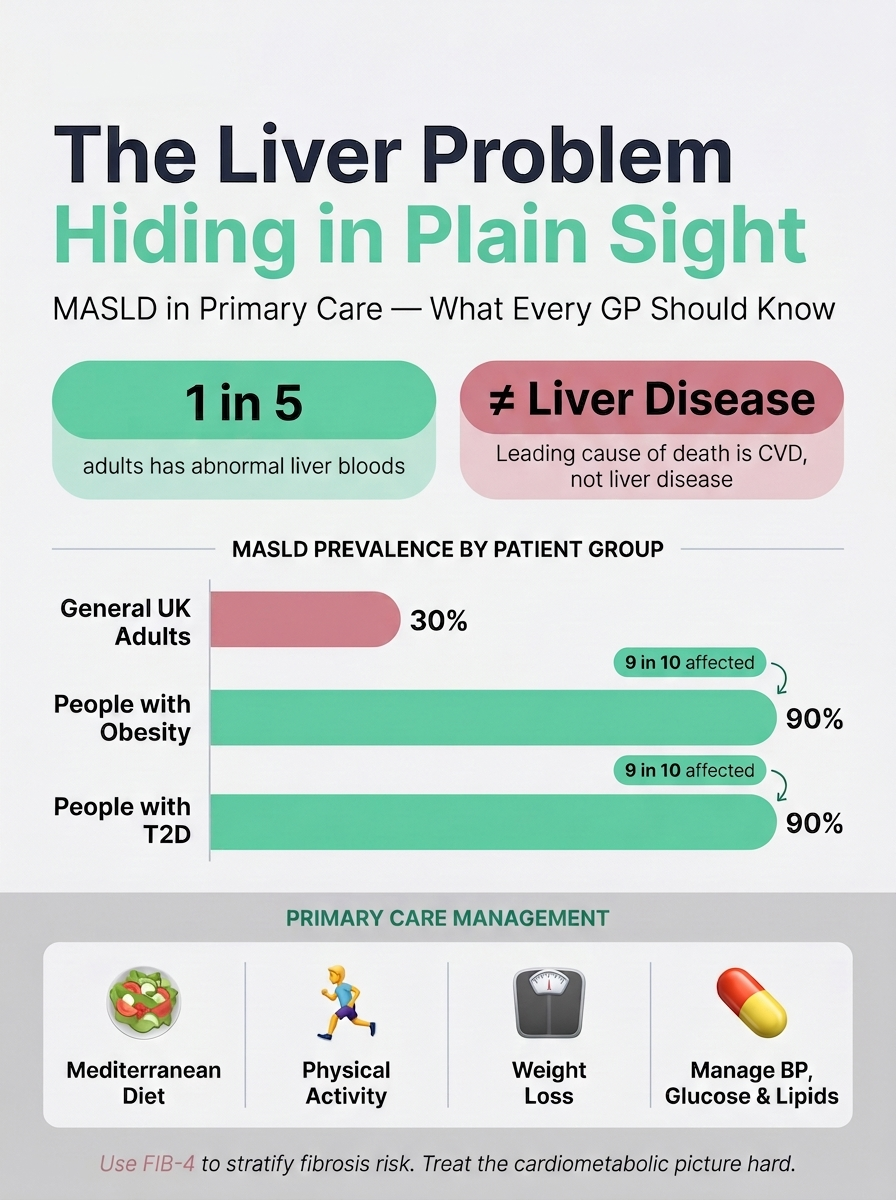
Download infographic:
Enjoyed this article?
- ✓Unlimited access to clinical evidence articles
- ✓Weekly newsletter with clinical evidence
- ✓Free for registered healthcare professionals