
The phase 3 diabetes endpoint for retatrutide has been met, as shown by TRANSCEND-T2D-1
The TRANSCEND-T2D-1 trial for Retatrutide i8n T2D was just published in The Lancet - big news. But what are the benefits of a triple agonist?
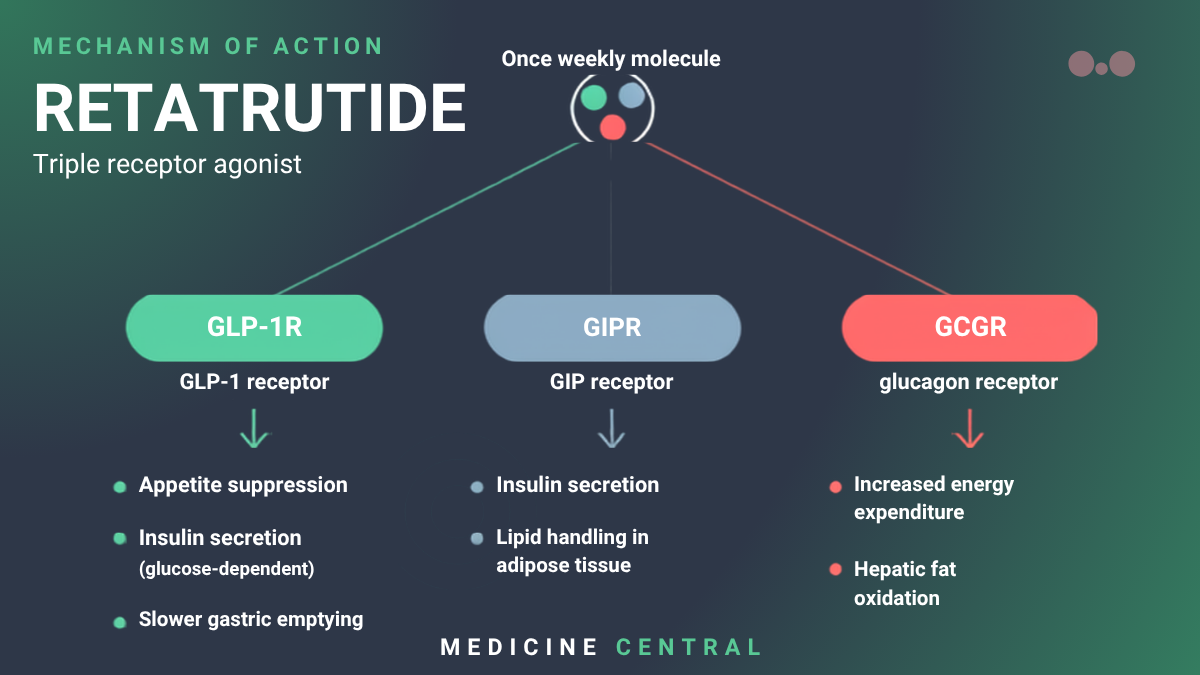
Retatrutide is a new treatment taken once a week. It activates three receptors: glucose-dependent insulinotropic polypeptide (GIP), glucagon-like peptide-1 (GLP-1), and glucagon. The glucagon-receptor component sets it apart from the dual agonists already in use. TRANSCEND-T2D-1 is the first study to show what that combination does for people with diabetes.
TRIAL DESIGN:
The trial randomised 537 adults with recent-onset type 2 diabetes
Their average disease duration was around 2.5 years
These participants had poorly controlled glucose levels despite diet and exercise
Participants had a baseline HbA1c between 7.0% and 9.5% and a body mass index of at least 23 kg/m².
They were assigned equally to retatrutide at 4 mg, 9 mg, or 12 mg, or to a placebo. This was given as monotherapy for 40 weeks, with no other glucose-lowering medication.
Testing the molecule alone, instead of with metformin or other agents, is an unusual choice. This approach makes it easier to link the glycaemic signal to the drug.
RESULTS:
HBA1c
The primary endpoint was the change in HbA1c at 40 weeks, starting from a baseline of about 7.9%.
Retatrutide lowered HbA1c by 1.69% on 4 mg, 1.86% on 9 mg and 1.94% on 12 mg, versus a fall of just 0.81% on placebo.
On the top dose that brought the average down to roughly 6.0%, reported as a reduction of up to 2.0% under the efficacy estimand.
Around 90% of those on retatrutide reached an HbA1c below the 7.0% target.
The most common side effects were gastrointestinal issues, mainly nausea, diarrhoea, and vomiting. These were mostly mild to moderate and often went away during treatment.
WEIGHT LOSS:
The weight loss from incretin therapies is usually less in people with type 2 diabetes compared to those with obesity alone. So, these figures are notable in context:
Participants on the 12 mg dose lost an average of 16.8% of their body weight by week 40. The weight loss trend continued, so it's unclear where their weight might stabilise over time.
The active arms accompanied the glycaemic and weight effects with reductions in triglycerides, non-HDL cholesterol, systolic blood pressure, and waist circumference.
THE MECHANISM:
The interpretation from the authors (take this with a pinch of salt) is that GIP and GLP-1 help promote insulin, balancing out glucagon's effect of raising glucose. Meanwhile, glucagon aids in energy use and managing liver fat.
That balance is the central premise of a triple agonist, and TRANSCEND-T2D-1 is the first phase 3 evidence that it holds in a diabetes population.
WHAT THIS MEANS FOR PRIMARY CARE:
The trial ran for 40 weeks with people early in their disease. It doesn’t show how long the effects last. It also doesn’t cover those with longstanding or insulin-treated diabetes. Plus, it skips cardiovascular and renal outcomes. These factors are important for guideline decisions.
For UK primary care, these results show a shift towards single molecules. These molecules target multiple metabolic pathways at once. They offer better glycaemic control and more weight loss than traditional type 2 diabetes medications. The next wave of trials needs to find out if that leads to better long-term outcomes and what the cost and tolerability in routine care will be.
Bajaj HS, Welch M, Shah P, et al. Efficacy and safety of retatrutide, a GIP, GLP-1, and glucagon receptor agonist, in people with type 2 diabetes and inadequate glycaemic control with diet and exercise (TRANSCEND-T2D-1): a double-blind, randomised, phase 3 trial. Lancet. 2026;407:892–908. doi:10.1016/S0140-6736(26)00967-0
Enjoyed this article?
- ✓Unlimited access to clinical evidence articles
- ✓Weekly newsletter with clinical evidence
- ✓Free for registered healthcare professionals