
Primary Care Research: From an Optional Extra to an Essential Part of Modern General Practice
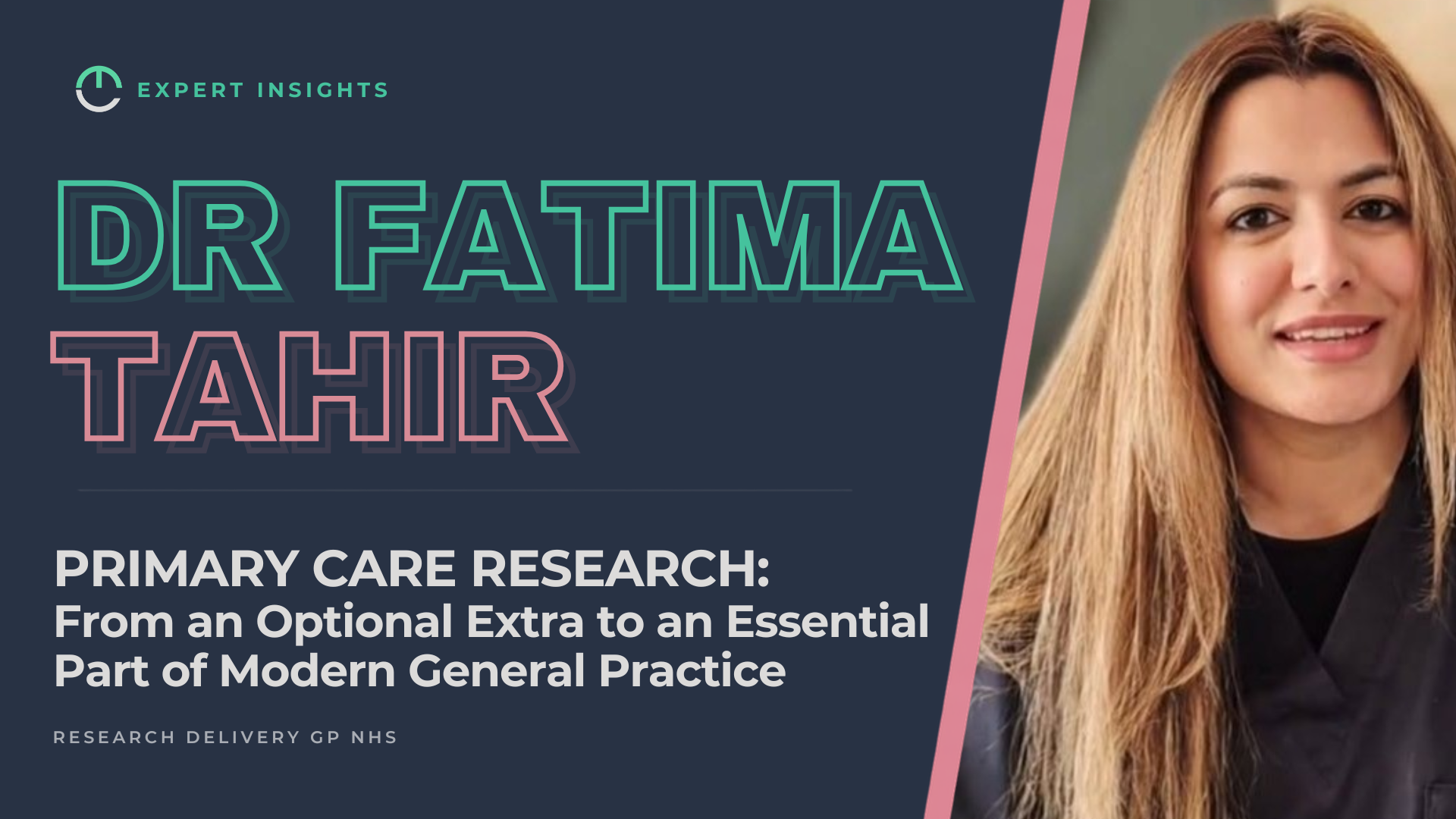
Almost 90% of NHS patient contacts happen in primary care, yet most research still happens somewhere else. Dr Fatima Tahir on why that gap matters, and what practices stand to gain from closing it.
Research delivery is one of the least understood routes into professional development in general practice, and one of the most persistently misunderstood. In the first of a new recurring series, Dr Fatima Tahir, GP and primary care research lead, sets out why research belongs in primary care and why the barriers to getting involved are lower than most clinicians assume.
Historically, research has often been viewed as something that happens in universities or large teaching hospitals. Yet almost 90% of NHS patient contacts occur in primary care. If we want research to reflect the real populations, then general practice has to be part of that journey.
Before I fell into research as a fully qualified GP, I used to think that I would need a PhD or academic degree to get involved in research. I was pleasantly surprised to discover that, without formal research training, I could lead multiple clinical trials in NHS practices. I achieved this after learning about the right qualifications and pathways for research delivery in primary care. And I see so many primary care professionals today who want to do research but they feel overwhelmed due to lack of clarity on what is required.
The benefits go beyond the individual
There are so many benefits to GP practices that become research active. Research delivery is much more than just participating in studies. Research encourages evidence-based thinking, strengthens multidisciplinary teamwork and creates opportunities for professional development across the whole practice. It also attracts additional income that supports workforce development and service improvement.
Most importantly, patients benefit. Research-active practices are associated with improved patient outcomes. Participation in studies can provide earlier access to innovative diagnostics, treatments and preventative interventions. Many patients are keen to contribute to research when given the opportunity — yet they are never asked, because studies are simply unavailable in their local practices, often because those practices don't know where to find them.
Size is not a barrier
There remains a common misconception that research is only feasible for large practices with dedicated academic teams. This is not the case. With the right support, governance, and partnerships, practices of all sizes can deliver high-quality research alongside everyday clinical care.
In recent years, the UK has set ambitious goals to increase commercial clinical research and bring more studies into community settings. This presents an exciting opportunity for primary care to move from being a passive recruiter of participants to becoming an active research delivery environment. Doing so will require collaboration between practices, research networks and sponsors.
Whether you choose to become a principal investigator, support patient identification or simply start conversations about research within your practice, every step contributes to a stronger research culture.
Useful resources:
This is the first in a recurring series on research in primary care. In the next piece, Dr Tahir will move from the 'why' to the 'how', covering the qualifications, governance and partnerships that take a practice from interested to research active. She posts practical guidance on research in general practice on her YouTube channel.
Enjoyed this article?
- ✓Unlimited access to clinical evidence articles
- ✓Weekly newsletter with clinical evidence
- ✓Free for registered healthcare professionals