
From PCOS to PMOS: A Practical Update for GPs
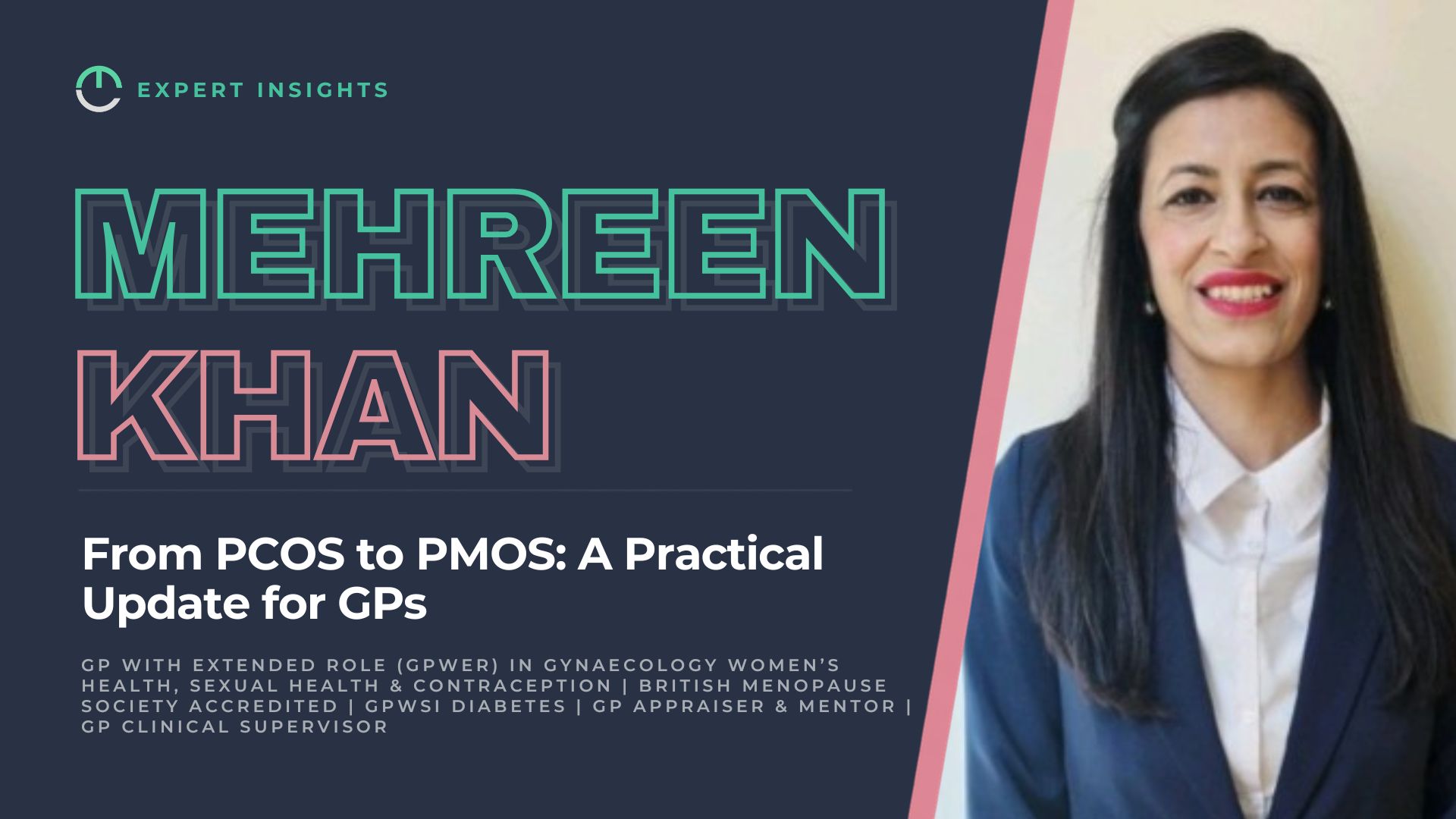
PCOS has been officially renamed Polyendocrine Metabolic Ovarian Syndrome (PMOS) following international consensus in 2026. This expert update covers the new diagnostic criteria, holistic management approach, and what this means for primary care.
Polycystic Ovary Syndrome (PCOS), affecting approximately 1 in 8 women of reproductive age, has officially been renamed Polyendocrine Metabolic Ovarian Syndrome (PMOS) following international consensus in 2026.
The new terminology better reflects the condition
PMOS is now seen as a multisystem endocrine and metabolic disorder, rather than a purely ovarian disease. Up to 70% of cases remain undiagnosed, highlighting the importance of improved recognition in primary care.
PMOS is now understood as a complex condition with reproductive, metabolic, cardiovascular, dermatological and psychological consequences. Insulin resistance is considered the key pathophysiological mechanism, driving hyperandrogenism and increasing the risk of type 2 diabetes, dyslipidaemia, hypertension and obstructive sleep apnoea.
Diagnosis is increasingly clinical
According to the 2023 International Evidence-Based Guideline, a diagnosis can often be made based on irregular menstrual cycles, plus clinical or biochemical hyperandrogenism.
Many women can therefore be diagnosed without the need for ultrasound. If only one of these criteria is present, adults should undergo further assessment with either transvaginal ultrasound (TVUS) or anti-Müllerian hormone (AMH) testing.
Ultrasound is now considered a second-line investigation. Importantly, polycystic ovarian morphology alone does not diagnose PMOS, as around one-quarter of women have polycystic ovaries on imaging without having the syndrome.
In adolescents, irregular cycles and polycystic ovarian morphology are common physiological findings; these patients should be considered "at risk" and reassessed later rather than labelled prematurely.
Management should be holistic and personalised
GPs should routinely assess:
- HbA1c
- Lipid profile
- Blood pressure
- BMI
- Sleep apnoea risk
Lifestyle modification remains the cornerstone of management
No single diet is recommended; instead, sustainable healthy eating and regular physical activity should be encouraged. A 5% reduction in body weight can significantly improve fertility and metabolic outcomes.
Mental health screening is essential, as PMOS is strongly associated with anxiety, depression, eating disorders, body image distress and psychosexual dysfunction.
For symptom management, combined oral contraception remains first-line for menstrual irregularities where not contraindicated. Women with oligomenorrhoea who decline hormonal contraception require cyclical progestogens to reduce the risk of endometrial hyperplasia.
Metformin can be initiated in primary care, particularly in women with BMI >25 kg/m² (with lower thresholds for South Asian women), starting at 500 mg daily and titrating gradually.
Referral should be considered for treatment failure, fertility concerns, or testosterone levels >5 nmol/L which warrant urgent endocrine assessment to exclude an androgen-secreting tumour.
PMOS should therefore be recognised as a lifelong metabolic and endocrine condition requiring early diagnosis, cardiometabolic risk assessment, psychological support and holistic long-term management.
Medicine Central is a clinical evidence review for UK primary care clinicians. Content reflects evidence current at time of publication and should be read alongside local formulary and clinical guidance. For healthcare professionals only.
Enjoyed this article?
- ✓Unlimited access to clinical evidence articles
- ✓Weekly newsletter with clinical evidence
- ✓Free for registered healthcare professionals