
Iatrogenic menopause is associated with a higher risk of cardiovascular disease and mortality
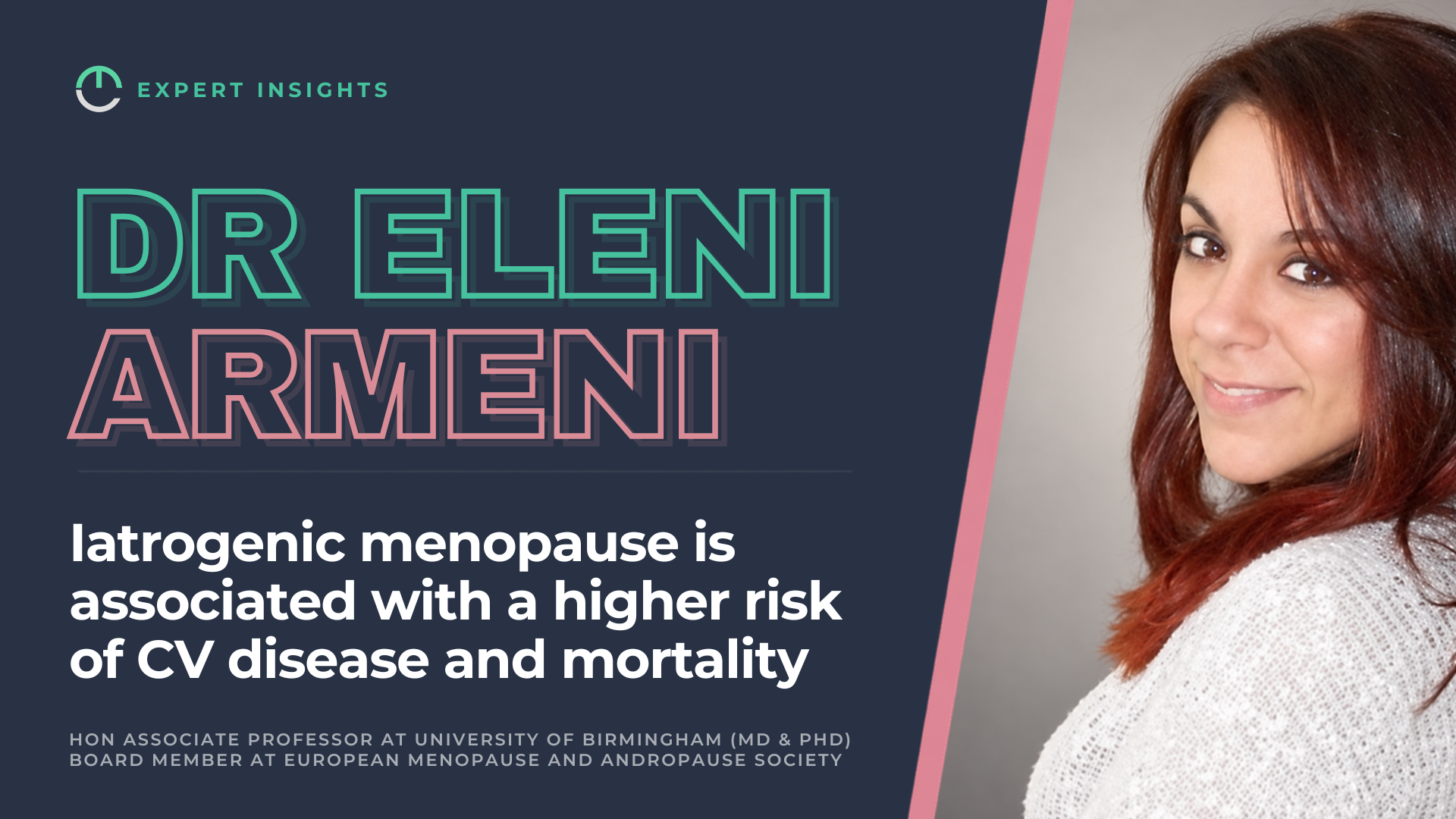
Iatrogenic menopause is associated with a higher risk of cardiovascular disease, while menopause before 45 is associated with higher cardiovascular and all-cause mortality.
Iatrogenic menopause is associated with a higher risk of cardiovascular disease, while menopause before 45 is associated with higher cardiovascular and all-cause mortality.
Up to half of hysterectomies also involve bilateral salpingo-oophorectomy (BSO). The younger it happens, the higher the cardiovascular risk.
The long-term cardiovascular effects, 20 years later, have been debated for a generation, mainly because earlier studies mixed comparators, age cut-offs and hormone use.
A new systematic review and meta-analysis brings together data from more than 2.6 million women.
The study combined 36 studies involving 2,617,942 women, with a median follow-up of 16 years. Women who experienced iatrogenic menopause before the natural age of menopause were compared to those who went through natural menopause or to age-matched controls.
The headline associations all point the same way.
Iatrogenic menopause raised the risk of several cardiovascular events
It was linked to a 25% higher chance of composite cardiovascular events (pooled HR 1.25, 95% CI 1.12 to 1.39).
The risk of coronary heart disease increased by 48% (HR 1.48, 95% CI 1.07 to 2.03).
Additionally, there was a 22% higher risk of stroke (HR 1.22, 95% CI 1.15 to 1.28). Stroke was the most consistent finding. There was no variation between studies, and it was the only outcome rated with moderate certainty by the authors.
All-cause mortality was 8% higher (HR 1.08, 95% CI 1.01 to 1.16).
The mortality excess was confined to women whose iatrogenic menopause occurred before 45. In that group cardiovascular mortality was 20% higher (HR 1.20, 95% CI 1.04 to 1.37) and all-cause mortality 15% higher (HR 1.15, 95% CI 1.06 to 1.25). At or after 45, neither cardiovascular mortality (HR 0.95, 95% CI 0.81–1.11) nor all-cause mortality (HR 0.99, 95% CI 0.89–1.09) was increased.
The younger the menopause, the greater the risk. Across 11 populations, every five years later that iatrogenic menopause occurred was linked to an 11% lower risk of cardiovascular events and death. When deaths were analysed separately, however, the age effect was less clear.
The authors describe a period of elevated risk below 45 rather than a single threshold. The gradient ran in the same direction in every population, though its size varied widely.
The biological explanation: Iatrogenic menopause causes a sudden drop in ovarian hormones, years before this would naturally happen. This may affect blood vessels, cholesterol, blood sugar and inflammation. Closer to the natural age of menopause, the body may already have begun to adapt to falling hormone levels.
This matters in primary care because these women may need support for decades
NICE recommends hormone treatment for women with premature ovarian insufficiency, including when caused by medical or surgical treatment, until at least the natural age of menopause unless contraindicated. This new analysis adds an age-graded cardiovascular signal, with the greatest excess mortality seen when iatrogenic menopause occurs before 45.
Read the full paper here: https://jamanetwork.com/journals/jamanetworkopen/fullarticle/2854757
Enjoyed this article?
- ✓Unlimited access to clinical evidence articles
- ✓Weekly newsletter with clinical evidence
- ✓Free for registered healthcare professionals
Continue reading
Related articles
Further evidence and clinical perspectives on menopause and women’s health.
NICE backs a saliva test for endometriosis in revised draft guidance. What does the evidence show?
97.3% sensitivity, 94.1% specificity, and NICE still calls its accuracy in primary care unclear. Here is why both things are true.

The Change We Forgot to Finish Talking About
This is a chance for women to get their mojo back.
MASLD is not just a man's disease
Most of us carry a mental model of fatty liver disease as something that turns up more often in men. A new narrative review in Diabetologia suggests it's time for an update.