
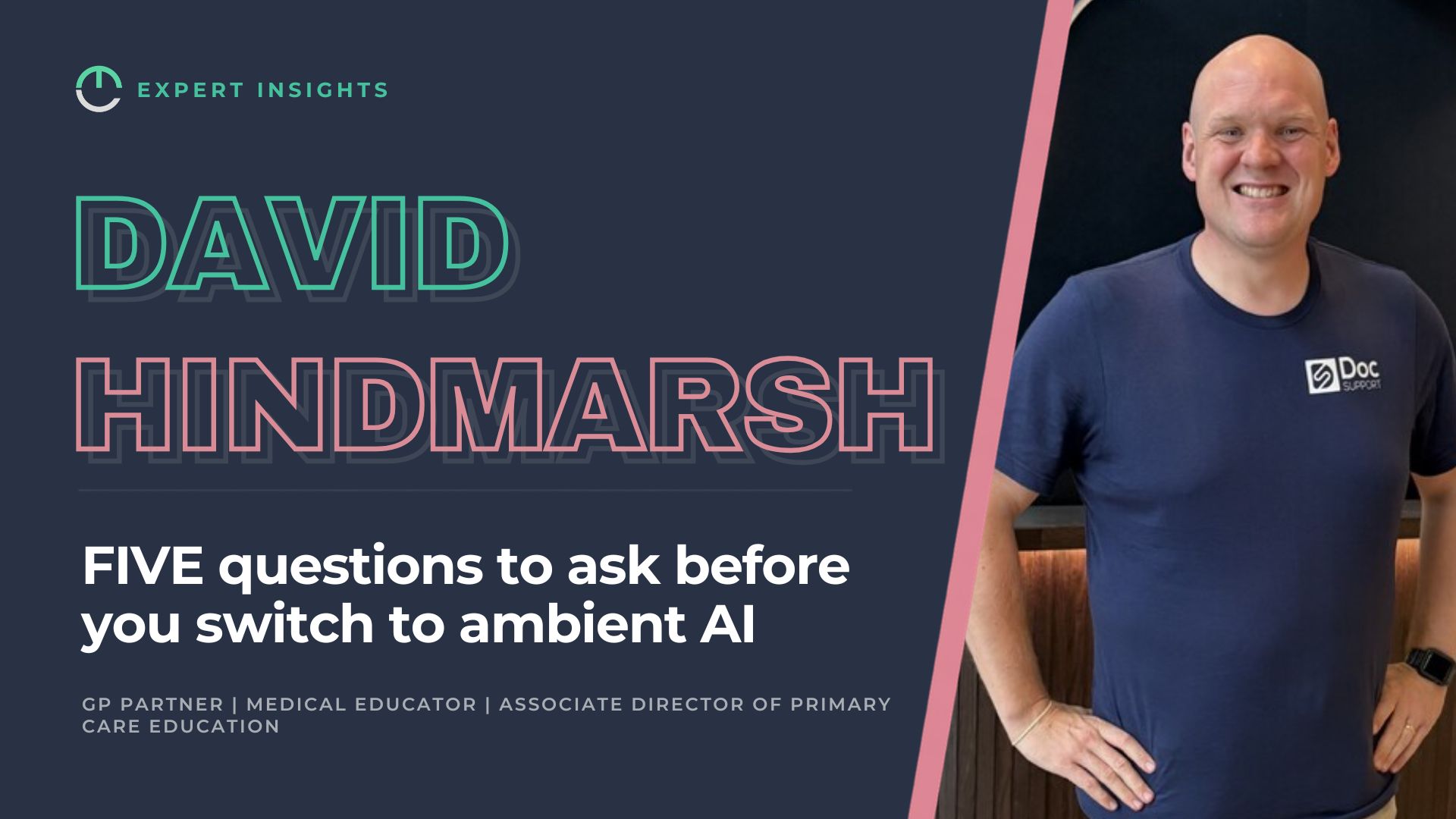
FIVE questions to ask before you switch to ambient AI
Healthcare is not immune from the Artificial Intelligence push! No doubt your e-mails and LinkedIn posts are littered with new products and services that promise to save you time, your sanity, provide clinical information as well as save the world as well!
But is it safe?
The main process that AI is being pushed through into Primary Care is through Ambient Voice Technology (AVT). This is where there will be a live recording of the consultant and a summary provided. Ready for the busy clinician to copy and paste into the patient record. A lot of companies have offered free trials and offers but what is missed is the backend work that is needed to make sure there is safe use.
There are though some key questions to ask yourself if you are using this?
Do you need to consent patients?
Do you need a risk assessment (DCB0160)?
Does AVT need to be a class 1 medical device?
Does AVT need to have a Data Protection Impact Assessment (DPIA)?
Do I need to have a Clinical Safety Officer (CSO)?
Consent wise, the answer is a YES! A huge yes! Patients should have adequate information about AI use in their consultation prior to coming in (either in practice on the website) and also consented before it’s use. This consent then needs to be documented in the consultation as well so that this can be audited to see that quality of the notes provided and will help overall.
Risk assessment?
The DCB0160 is a risk assessment completed by the practice or business that are using the product. There will be a corresponding risk assessment produced by the company that you have to ask for (DCB0129). This effectively hands over the risks identified from the company and passes them over to the company using them.
Class 1 medical device?
So, the answer has just recently changed… If it is JUST AVT the answer is technically no…. BUT as soon as a product is trying to suggest diagnosis or doing anything else then it becomes a class 1 device if not higher. What does this mean for you as the end user? Nothing much really, but for the company, there is costs associated with the registration and also TIME in getting this signed off.
DPIA?
Again, yes. A set paperwork that shows that you have thought where the patients information is going and has there been appropriate consideration of this.
Where is the Clinical Safety Officer?
This one is missed out, A LOT. This is not a new role and has been around for over 10 years. The issue is that the role has not been well advertised. The CSO is an additional role and training that allows technologies to be appropriately risk assessed and monitored within a practice. You can be trained to be a CSO with a day course (I would recommend ETHOS)
Finally, your practice needs to have an AI policy. This policy could be as simple as ‘we don’t use it’ but it needs to highlight what can be used. How it can be used and what products the necessary risk assessments have been completed for.
Please take a look at our YouTube channel where there are several videos on this topic.
Enjoyed this article?
- ✓Unlimited access to clinical evidence articles
- ✓Weekly newsletter with clinical evidence
- ✓Free for registered healthcare professionals
Related evidence: ambient AI in primary care
Read a first-hand expert review of ambient AI scribes and clinical documentation.